From Father Steven - February 1, 2026
Dear Brothers and Sisters,
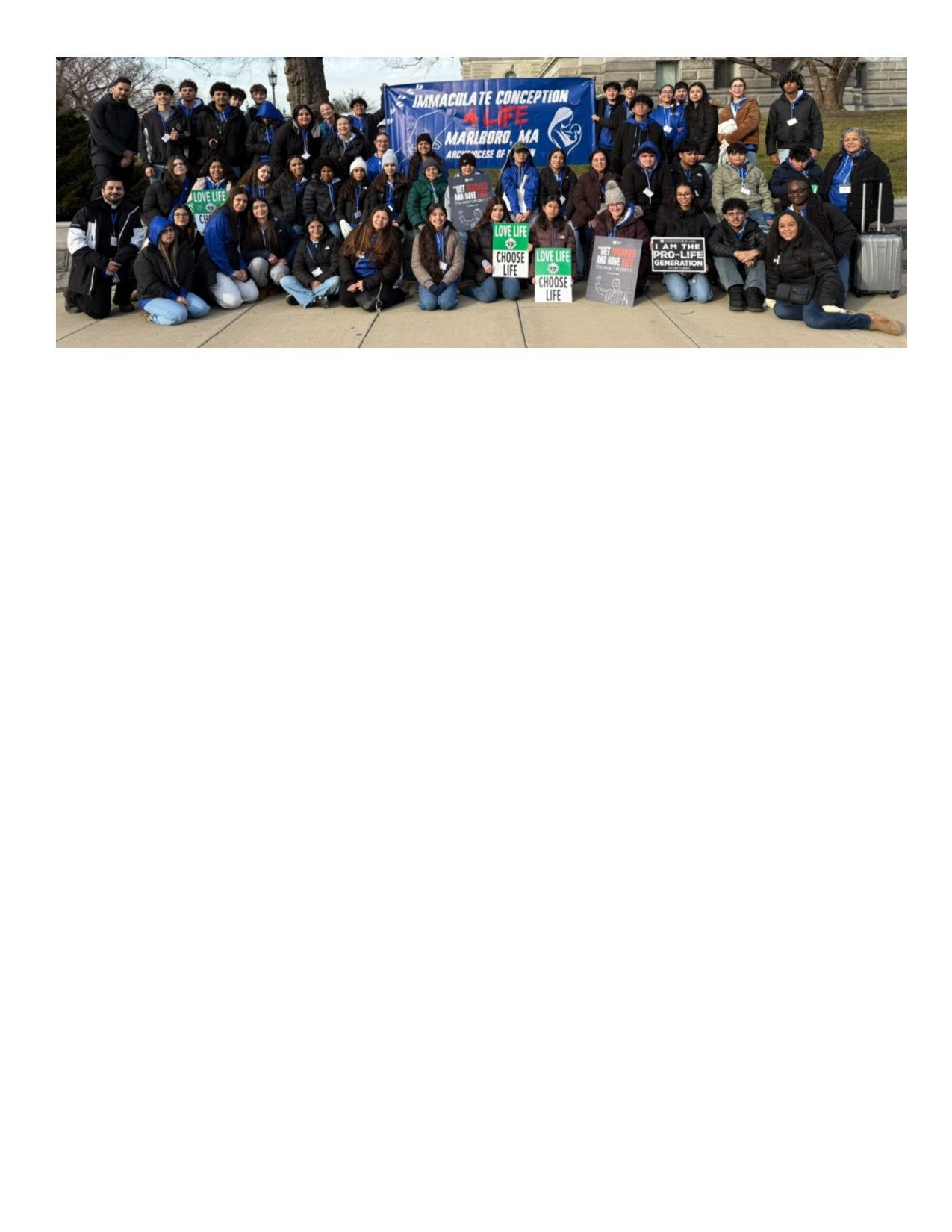
This past week, the parish took a bus loaded with youth to attend the March for Life in Washington. It was really a blessing to all of us. We attended an event held on Friday morning by the Sisters of Life. During Mass, New York's auxiliary Bishop, Joseph Espaillat, delivered a passionate and energetic homily centered on the consistent dignity of human life and a full Catholic pro-life ethic, delivered a powerful homily. Drawing from the Church’s teachings and the Second Vatican Council’s pastoral constitution Gaudium et Spes, he invited all in attendance to embrace every aspect of a life-affirming vision, not just select issues. I would like to share some points with you.
In his homily, Bishop Joseph Espaillat energizes the congregation by acknowledging their sacrifice in waking early, traveling long distances, and enduring fatigue to be present. Drawing on his own experience of attending the March for Life as a teenager and seminarian, he reassures especially young people that the effort is worth it, emphasizing a repeated refrain: “In the end, love wins.” This phrase becomes the central theme of his message, underscoring that love—not anger, exhaustion, or despair—is the Christian response to the struggles surrounding life issues.
Bishop Espaillat situates the pro-life movement within the broader faith and tradition of the Church. He stresses that Catholics do not rely solely on Scripture, but also on Sacred Tradition and the Magisterium. He highlights the importance of Vatican II documents, lamenting that many Catholics—laypeople and clergy alike—are unfamiliar with them despite their relevance. The Church, he explains, has a “constitution” similar to that of a nation: Gaudium et Spes, the Pastoral Constitution on the Church in the Modern World.
Focusing especially on Paragraph 27 of Gaudium et Spes, Bishop Espaillat walks the congregation through a list of violations against human dignity. He emphasizes that being pro-life is not a single-issue stance. While abortion is affirmed as a grave moral evil and a central concern, it cannot be isolated from other life issues. The document condemns murder, abortion, euthanasia, suicide, torture, coercion, subhuman living conditions, arbitrary imprisonment, deportation, slavery, human trafficking, and exploitative labor. According to the bishop, Catholics cannot “pick and choose” which lives deserve protection. To do so undermines the Gospel and weakens the Church’s moral witness. He reinforces this point by quoting Fulton Sheen and his own seminary professors: refusing to take a stand on major moral issues is itself a decision and amounts to silent cooperation with evil. By choosing to travel to Washington, D.C., the faithful have already made a decision—to stand publicly for life and truth. Bishop Espaillat explains that disrespect for life poisons society, leading to violence, war, and hatred. When life is not honored—beginning in the womb—all of society suffers. At the same time, he offers hope: the Christian response is to listen, teach, and send. The Church must listen to one another across generations and roles, teach clearly without relativism, and then send disciples into the world as witnesses.
Returning to the Gospel, he reflects on King David’s choice of mercy over violence and calls for a consistent life ethic grounded in compassion, truth, and love. Quoting Popes John Paul II, Benedict XVI, and Francis, he rejects the “throwaway culture” and urges defense of the unborn, the poor, the sick, the elderly, and the marginalized. He concludes by encouraging the faithful, especially young people, to respond to opposition with love, to be light rather than hostility, and to remember their mission: they are summoned, appointed, and sent. His final message echoes his opening refrain—love is the answer, and in the end, love wins.
God Bless,
Fr. Steven